
Have you spotted an Asian hornet? Report it and keep your distance
With the arrival of spring, more insects are becoming active again, including the Asian hornet (Vespa velutina). This species of wasp is becoming increasingly common in the Netherlands, including in South Holland.
About the Asian hornet
The Asian hornet is an invasive alien species that preys on pollinating insects such as honeybees, wild bees, bumblebees, and butterflies. As a result, the species can impact biodiversity and the pollination of plants and crops. Measures are therefore being taken in several European countries to limit its spread. In the Netherlands, too, efforts are underway to develop a coordinated approach.
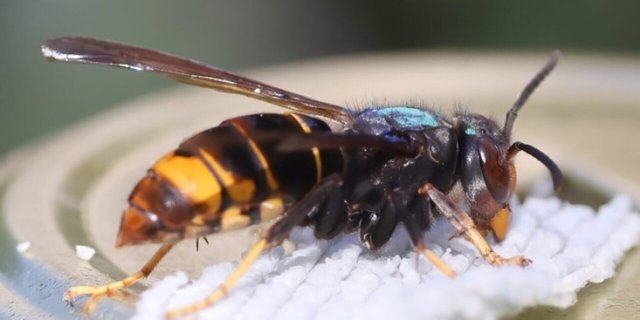
Identifying hornets and their nests
The Asian hornet can be recognized by its dark body, a single broad yellow band on its abdomen, and striking yellow legs.
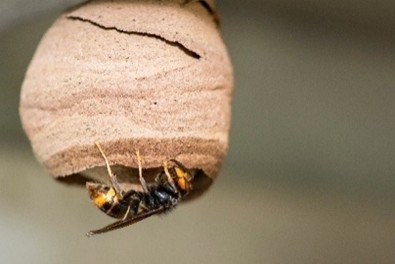
In the spring (March–May), the queen builds small initial nests, also known as embryonic nests. These are often found in sheltered spots, such as in sheds, under eaves, or in birdhouses.
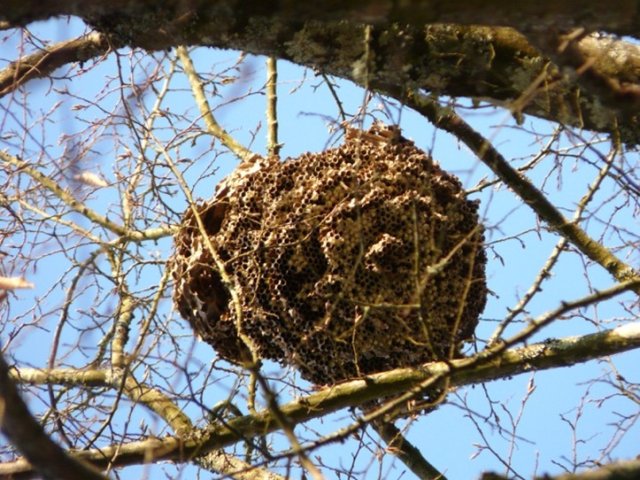
Later in the year, the nests move to bushes or high up in trees and grow larger. It is especially important to spot nests early in the spring, because at that time they are still small and relatively easy to remove. On the right, you can see examples of a summer nest and an embryonic nest.
What can you do?
Have you spotted a (possible) nest of Asian hornets?
- Keep your distance and do not disturb the nest;
- Please report your sighting via the central reporting hotline at ;
- Follow the instructions provided by the hotline; they will let you know what happens next;
- If you are unable to submit a report through the reporting portal, please contact the municipality via the BinnenBeter app.
Why reporting is important
It is important to report nests promptly. This allows specialists to safely remove them. This helps limit the spread and protects bees and other beneficial insects.
Learn more
The flyer explains what to look for and how to report it. It also includes a QR code that allows you to quickly submit your observation.