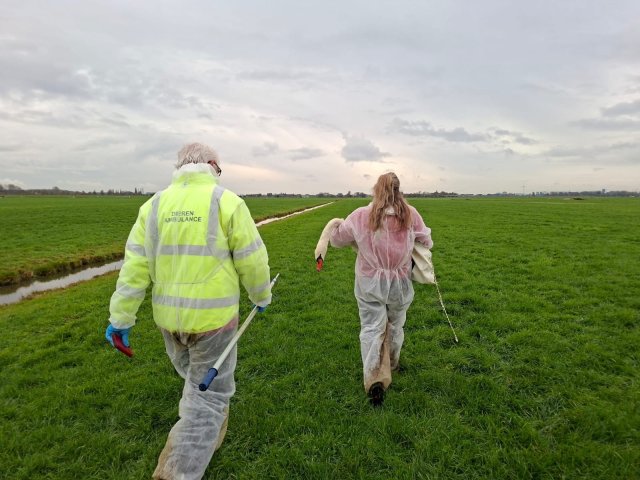
Dealing with bird flu in Wassenaar
Avian influenza is prevalent in various parts of the Netherlands. Sick and infected birds have been found in the wild and at poultry farms in several provinces. Unfortunately, several poultry farms have also been culled. Avian influenza has also been detected in municipalities around Wassenaar, and dead water birds (swans and geese) infected with avian influenza have now been found in Wassenaar.
What is avian influenza?
Avian influenza is a viral infection (zoonosis) that occurs in waterfowl, among other animals. The disease is contagious among birds and can also spread to other mammals. Humans can become infected, although the risk is low as long as there has been no direct and intensive contact with infected animals. The virus is not transmitted from person to person.
Seen a sick or dead (water) bird? Do not touch it and report it.
Do not touch sick or dead birds, but call the Animal Ambulance on 070 511 7772. They will collect sick and dead birds on behalf of the municipality of Wassenaar. It is important to report this quickly, especially if you find several dead birds together.
Have you come into contact with a sick or dead bird? If so, wash your hands thoroughly with water and disinfectant soap. If you experience symptoms such as fever, sore throat, coughing, or muscle pain after touching a bird, call your doctor or the Municipal Health Service (GGD) to be on the safe side.
Dogs on a leash
Do you walk your dog in areas where there are many water birds? To be on the safe side, keep your dog on a leash. This will prevent your dog from touching dead birds and spreading the virus further.
Cats and other pets
In addition to dogs, cats and other pets can also come into contact with infected birds. Therefore, try to prevent this contact as much as possible.
Hobbyists
The municipality is also asking hobby poultry farmers to be vigilant. Anyone who keeps chickens, ducks, or other high-risk birds must ensure that the animals do not come into contact with wild birds. Currently, there is a mandatory screening and housing requirement in place to prevent infection.
Learn more
More information about avian influenza and its symptoms in birds can be found on the RIVM website, among other places.