Invasive Alien Species
The climate is changing, and nature is changing with it. You can see the effects of this in the municipality of Wassenaar as well. One example is the spread of harmful plants such as Japanese knotweed. These persistent plants can cause significant damage to your garden and home, as well as to public spaces and nature areas. Invasive and non-native species can cause damage in all nature areas. However, the damage is noticeably greater in Natura 2000 areas. Open and semi-open natural areas, such as the dunes, in this region are being overgrown more slowly but at an accelerating rate.
Learn how to identify common invasive exotic species and exotic species with invasive characteristics in Wassenaar, and what you can do to prevent their spread or control the plants.
Japanese knotweed, giant hogweed, and invasive species in public spaces
The municipality Map the locations of these plants on a Map . Have you spotted Japanese knotweed, giant hogweed, or any other invasive or rapidly spreading plant species in a public area? Please report it using the reporting form at . Be sure to clearly indicate the location and specify which invasive species or rapidly spreading plant species you’ve spotted. You can also attach a photo to your report. You can also contact the Customer Contact Center by phone at 14 070.
The municipality is combating Japanese knotweed and giant hogweed. Japanese knotweed is mowed monthly during the growing season. This weakens the plant and prevents it from spreading further.
Wassenaar is not currently taking action against exotic plants with invasive characteristics in public spaces. Nevertheless, we would like to know where and how often these plants occur.
Survey map
On the Map , you Map see where Japanese knotweed and giant hogweed have been spotted in Wassenaar so far.
Invasive Alien Species on Private Property
Do you have invasive exotic species or other exotic plants, such as Japanese knotweed and giant hogweed, on your property? If so, you can hire a landscaper or control the plants yourself. A landscaper can advise you on this. The municipality will not come to inspect the site. You can find detailed advice and an assessment of control methods for Japanese knotweed in the report by the Probos Foundation.
What you need to know about Japanese Knotweed
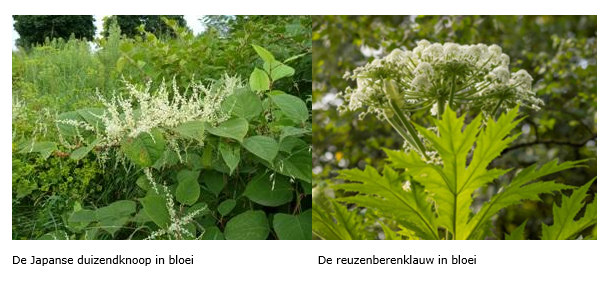
- Japanese knotweed is an invasive exotic species. An invasive exotic species is a plant, animal or other organism that does not originally occur in the Netherlands, but has nevertheless gained a foothold here, often under the influence of human activity.
- Japanese Knotweed dies off above ground in winter, but blooms above ground from March/April to November.
- The roots go deep (sometimes up to three meters). The stems are green in color with red spots and hollow inside. The stems resemble bamboo.
- Japanese Knotweed grows at lightning speed. First you see small red buds and leaves, and shortly after that the stems shoot out of the ground. In summer, the leaves become fresh green in color and as big as your hand. White flowers appear at the ends of the stems. The plant can grow up to two meters tall.
- Japanese Knotweed is beautiful, but dangerous. It displaces other plants and causes damage to bike paths, asphalt roads and the foundations of buildings and homes due to its enormous growing power. To invade your home, a small crack or hole is all the plant needs.
- Early removal is therefore of the utmost importance—not only for your own yard and home, but also for public green spaces, nature reserves, and the outdoors.
What You Need to Know About Giant Hogweed
- Giant hogweed grows to a height of between 2 and 3 meters.
- The plant first appears as a rosette.
- Giant hogweed does not bloom until several years have passed. It blooms starting in mid-June, producing white flowers in umbels about 50 cm across.
- The underside of the leaf has stiff hairs.
- The stem also has stiff hairs and purple spots.
- Early removal is therefore of the utmost importance—not only for your own yard and home, but also for public green spaces, nature areas, and the outdoors. Health proper protection, cover your skin and wear gloves.
Contributing to the Protection and Enhancement of Nature in Wassenaar
Meijendel & Berkheide Natura 2000 Site
Do you also help control the invasive alien species and non-native species with invasive characteristics mentioned above in your garden? By doing so, we prevent the spread of these species both within and outside the Natura 2000 area. In addition to invasive alien species, this also applies to non-native species with invasive characteristics, as listed below.
Invasive alien species and alien species
Invasive Alien Species
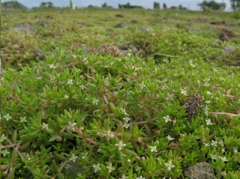
- Water Crassula
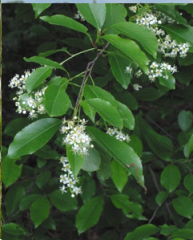
- American bird cherry
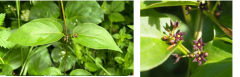
- Black Nightshade